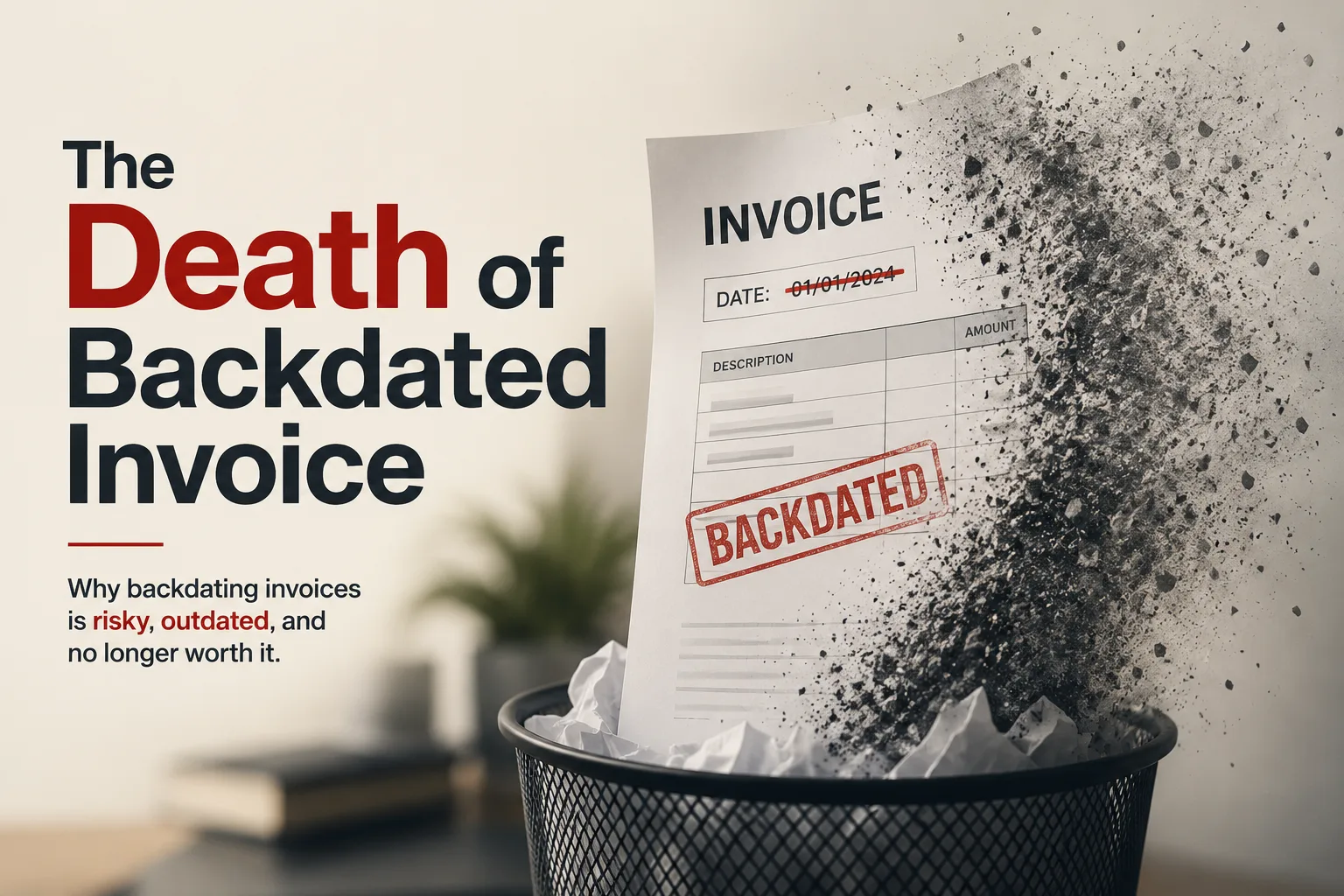
The Nigerian invoice has always been a flexible document — wrong date, missing receipt, fix it retroactively, no problem. The Nigeria Revenue Service (NRS) just ended that. And the businesses most likely to get hurt by it aren't necessarily the ones doing anything wrong.
The Clock Is Already Running
NRS's e-invoicing platform, the Merchant-Buyer Solution (MBS), isn't a future plan. It's live now for the businesses that move the most money. Large taxpayers, with an annual turnover of ₦5 billion or more, have had to invoice through it since November 1, 2025, after the original August deadline slipped once. Medium businesses, falling in the ₦1 billion to ₦5 billion bracket, go live by July 2026, with penalties kicking in from early 2027. Everyone else gets until July 2027, with enforcement starting in 2028.
Uptake initially started slow. In the opening weeks following the large-taxpayer deadline, industry compliance reports suggested only about 1,000 of roughly 5,000 eligible companies had successfully integrated—one in five. MTN got there first. Make of that what you will about everyone else.
Why the New Invoice Can't Lie
Here's what actually matters. Every valid e-invoice gets a unique reference number and an NRS
digital stamp the instant it's transmitted—not at month-end, not at audit time, but the exact instant the transaction happens. It's a structured file, not a scan, built on the same real-time architecture several other countries already run. There's no reissuing it with a friendlier date. The system timestamps reality as it occurs, which is a problem for a business culture that has occasionally treated invoice dates as a suggestion rather than a fact.
The Risk Nobody's Pricing In
Most coverage stops at comply-or-get-fined. The sharper problem: you can only claim input VAT credit on invoices carrying a valid NRS stamp. If your supplier hasn't onboarded, their invoice to you isn't fully real for tax purposes. You paid the VAT. You may not get it back.
That cuts against companies that have done nothing wrong. A large, fully compliant buyer with dozens of medium-sized suppliers not due to go live until July 2026 could spend most of a year receiving technically non-compliant invoices from vendors still inside their own regulatory deadline, and lose the input VAT credit on every one of those purchases anyway. For a business with a heavy supplier book, that exposure adds up fast, and it has nothing to do with your own compliance.
What It Costs to Get This Wrong
If you're the one out of compliance, the numbers are specific enough to plan around. Failing to grant access for the deployment of required technology costs ₦1,000,000 on day one, followed by a ₦10,000 daily compounding penalty under Section 103 of the Nigeria Tax Administration Act (NTAA) 2025. Actively routing supplies or issuing invoices outside this fiscalisation system brings a ₦200,000 administrative penalty under Section 104, plus 100% of the VAT due, plus interest at the Central Bank's prevailing monetary policy rate. None of this is a once-off slap. It compounds, and for a mid-sized business running a few hundred transactions a month, that turns into real money within weeks.
Why This One Won't Blow Over
Nigerian businesses have a well-earned instinct for outlasting compliance deadlines. This one's built differently, and the difference is who's doing the enforcing. It isn't only NRS chasing you; it's your own customers, the moment they realise your invoice can cost them their VAT credit. A rule your customers have a direct financial incentive to enforce for you is much harder to wait out than one that depends on an understaffed tax office getting around to you eventually.
What's Worth Doing Now
Confirm your real turnover bracket and deadline; don't assume "small business" buys you until 2028 by default. If you sell to larger, compliant buyers, start the integration conversation with them now, since their exposure to your delay becomes commercial pressure on you long before your own deadline arrives. And use this as the moment to make sure your invoicing and your actual books say the same thing, because the system is now built to notice if they don't.
The invoice used to keep your secrets. Now it keeps NRS's.
Figures and provisions cited are drawn from the Nigeria Tax Administration Act 2025, NRS public guidance, and industry compliance reporting through mid-2026.