
Bank Charges: Are You Paying More Than the CBN Allows?
Published October 17, 2026
The CBN sets the ceiling. Your account agreement may set a lower one. Your bank’s computer may apply neither correctly.
By Joe Adinma, FCA, FCTI — Managing Partner, Joe Adinma & Co. (Chartered Accountants)
Last updated: 17 October 2026
“It was calculated by the computer. It cannot be wrong.” That is the assumption many business owners make when they see unexplained bank charges. They complain, but seldom challenge the bank. The charges are generated automatically, the calculations look technical, and few businesses know how to reproduce them.
Consider a hypothetical oil-services company in Trans-Amadi, Port Harcourt. It receives contract payments through one bank, pays suppliers through another and runs payroll through a third. Its accounts team reconciles every statement, and every entry agrees with the cashbook. Yet no one has checked whether maintenance fees were charged on excluded transactions, or whether the facility’s interest rate was reset on the agreed date.
A computer can multiply the wrong rate by the wrong amount with flawless arithmetic. When a supplier sends an invoice, the business checks the service, quantity, price, tax and contract before paying. A bank usually deducts its fees before the customer has looked at them. Your bank statement is also a bill. And every bill deserves scrutiny.
How much can that cost? In the illustration in section 2, a company charged ₦12 million in maintenance fees over two years finds that only ₦8.4 million was permitted. If the CBN’s proposed 2026 changes have taken effect, the gap is wider still.
THE CENTRAL DISTINCTION |
Three questions every business should ask
Regulatory test | Arithmetic & contract test | Commercial test |
Is the charge permitted by the CBN rule in force on the transaction date? | Did the bank use the correct transaction base, rate, timing and agreed contractual terms? | Even if lawful and correctly calculated, is this the best banking arrangement for the business? |
A charge may be permitted in principle but applied to the wrong transactions. A calculation may be arithmetically correct but breach a negotiated tariff. Even a lawful, accurate charge can be poor value. Automation answers none of these questions.
1 | Which CBN Guide actually governs the charge?
The starting point is the CBN Guide to Charges by Banks, Other Financial and Non-Bank Financial Institutions, effective 1 January 2020, read with later binding circulars. A circular dated 10 February 2025 changed the charges for withdrawals at another bank’s ATM from 1 March 2025, and revised cash-related policies took effect on 1 January 2026. Quoting a 2020 fee without checking later amendments is not a reliable test. [1–3]
The hardest issue is the 21 April 2026 document expressly titled “Exposure Draft”. It invited comments by 8 May 2026, yet also referred to an intended 1 May commencement. Some May news reports presented the revised tariffs as already in force; others described them as proposals. As at 17 October 2026, we have not been able to verify a final CBN circular bringing the draft into force. A newspaper report is not, on its own, proof of legal commencement. [4–6]
The distinction matters. The draft halves the ceiling on the current account maintenance fee (CAMF, explained in section 2) from ₦1 to ₦0.5 per mille for 2026, falling to zero in 2027. It also raises the merchant service charge cap from ₦1,000 to ₦10,000. One change favours account holders; the other could permit a larger merchant fee. Where the outcome differs materially, the responsible approach is to rebuild the charge under both assumptions and require the bank to identify the signed instrument and commencement date it relied on. [1, 4–6]
TWO SCENARIOS — NOT TWO CONFIRMED LAWS |
2 | The CAMF trap: the right rate on the wrong base
WHAT CAMF IS, IN PLAIN TERMS |
So the biggest error is often not the rate. It is the base the rate was applied to. Every debit in the calculation should fall within the qualifying categories; anything else needs an explanation. [1]
The qualifying categories produce a result that surprises many business owners. Moving money from the company’s Bank A account to its own Bank B account may fall within Bank A’s CAMF base. Moving it between two of the company’s accounts at Bank A ordinarily does not. Ownership of the destination account matters, but so does whether the transfer crosses banks. Classify every entry independently rather than accepting the bank’s total.
An illustrative 24-month reconstruction
Assume 24 complete months, October 2024 to September 2026, with ₦12 billion of statement debits spread evenly, and a bank charging ₦1 per mille on all of it. An independent review documents ₦800 million of bank-induced debits, ₦2.2 billion of same-name transfers within the same bank, and ₦600 million of other debits shown, with evidence, to fall outside the CAMF categories. The qualifying base is ₦8.4 billion. These facts are invented solely to explain the method.
Illustrative reconstruction | Amount |
All statement debits (24 months) | ₦12.000bn |
Less: bank-induced debits | (₦0.800bn) |
Less: same-name, same-bank transfers | (₦2.200bn) |
Less: other evidenced non-qualifying items | (₦0.600bn) |
Qualifying CAMF base | ₦8.400bn |
CAMF actually charged (₦1 per mille on all debits) | ₦12,000,000 |
At a ₦1 per mille ceiling throughout, the permissible maximum is ₦8.4 million, leaving ₦3.6 million to be explained. Because the April 2026 text’s status is unresolved, a properly qualified review also shows the alternative.
Test | Permissible CAMF | Questioned excess | Plus 7.5% VAT* |
A. 2020 ceiling throughout | ₦8,400,000 | ₦3,600,000 | ₦270,000 |
B. ₦0.5 per mille from 1 May 2026 | ₦7,525,000 | ₦4,475,000 | ₦335,625 |
Scenario B workings: 19 months (October 2024–April 2026) × ₦350 million of qualifying monthly debits × 0.1% = ₦6,650,000; plus 5 months (May–September 2026) × ₦350 million × 0.05% = ₦875,000. Total ₦7,525,000. This is a sensitivity calculation only; it is not a conclusion that the draft became law.
*VAT sensitivity assumes 7.5% VAT was actually charged on the excess fees and has not been reversed. Gross amounts in question: ₦3,870,000 (A) and ₦4,810,625 (B). Neither is an established refund. Any input VAT already claimed on these fees must be adjusted to avoid double recovery.
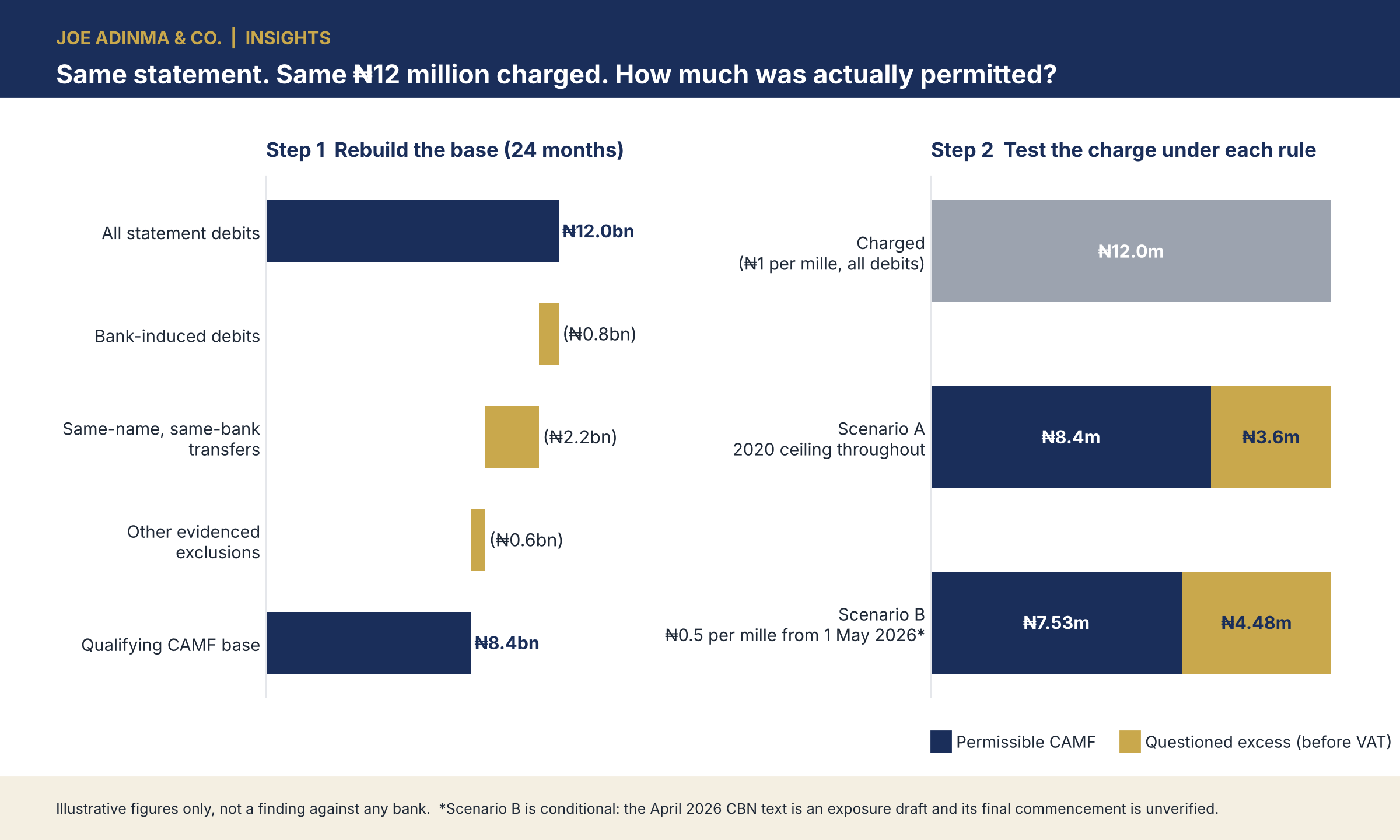
Figure 1 | Same statement, three answers. Scenario B is conditional, not evidence of an operative 2026 Guide.
WHAT THE ILLUSTRATION SHOWS |
3 | The opposite problem: merchant fees may be higher under the draft
The draft does not only cut charges. Take a ₦3 million card sale on which the acquiring bank deducts a ₦10,000 merchant service charge. Under the 2020 ₦1,000 cap, ₦9,000 looks excessive; under the draft’s ₦10,000 cap, the same deduction could be compliant. A refund demand that ignores the possible rule change is as weak as a bank reply that cites only a press report. The decisive question is which cap applied on the transaction date. Note too that the merchant charge does not entitle a retailer to add a “POS surcharge” to a card purchase, and a POS cash-out agent is a different service altogether. [1, 5, 7]
4 | The other charges worth checking
CAMF and merchant fees are often the largest lines, but not the only ones. These are the other charges worth testing, with the rule that applies to each.
Charge | What the confirmed framework says — and what to test |
Electronic interbank transfers | 2020 Guide: ₦10 below ₦5,000; ₦25 from ₦5,001 to ₦50,000; ₦50 above ₦50,000. The bands leave exactly ₦5,000 unaddressed, so ask the bank how it treats that amount. Draft 2026 tariffs differ. Match date, band and channel. [1, 5] |
Cards and alerts | 2020 Guide: no maintenance fee on naira cards linked to current accounts; up to ₦50 a quarter on savings-linked naira cards; $10 a year on foreign-currency cards. Email alerts free; SMS alerts on customer-induced transactions at cost recovery. The draft reportedly removes naira card maintenance and revises issuance fees. [1, 5] |
ATM withdrawals | From 1 March 2025: free at your own bank’s ATM. At another bank’s on-site ATM, ₦100 per ₦20,000 withdrawn (or part). Off-site, the same base fee plus a disclosed surcharge capped at ₦500; descriptions differ on whether that cap applies per ₦20,000 or per transaction, so request the bank’s calculation for any multi-band withdrawal. The former three free monthly withdrawals no longer apply. [2] |
Excess cash withdrawals | From 1 January 2026: 3% (individuals, above ₦500,000 a week) or 5% (corporates, above ₦5 million a week), on the excess only. Excess-deposit charges abolished. Distinct from CAMF and ATM fees. [3] |
5 | VAT and stamp duty: the bank’s fee is not the tax collector’s debit
A bank’s service fee is different from a statutory tax collected through the bank. In January 2026 the Nigeria Revenue Service clarified that VAT has always applied to banking service charges, naming account maintenance, transfer and card issuance fees, and that it applies to the fee, not to the sum transferred. If CAMF is overstated, the VAT charged on the excess should be reconstructed and an adjustment requested. A customer that has already claimed that VAT as input tax must adjust the claim; there can be no double recovery. [8]
Input VAT recovery is not automatic merely because a bank collected VAT. Section 156 of the Nigeria Tax Act 2025 (credit for input tax) allows qualifying input VAT on goods, services and fixed assets to the extent they are used for taxable supplies, with apportionment for mixed use and a time limit for claims. Whether a company can recover VAT on bank charges depends on its taxable activities, evidence, timing and VAT returns. We explore the wider principle in our article on input VAT recovery. [9]
A separate ₦50 stamp duty applies to qualifying electronic receipts or transfers of ₦10,000 or more, payable by the transferor under the Ninth Schedule. Section 185 (exemptions from stamp duties) excludes amounts below ₦10,000, salary payments and intra-bank self-transfers. A same-name transfer to a different bank can therefore attract both the stamp duty and CAMF under the 2020 Guide. These are distinct charges, not necessarily a duplicate deduction. [9]
So test each “stamp duty” debit against the threshold and exemptions before calling it excessive, and keep statutory collections apart from bank charges in the books.
6 | The loan statement may be the bigger bill
For borrowers, the largest exception may sit in the loan account rather than the current account. Examine the facility offer and amendments, margin and benchmark, reset frequency, value dates, outstanding principal, day-count convention, management and commitment fees, default interest and repayments. A computer can calculate interest perfectly on the wrong principal, or at a rate that should already have been reset. Rebuild the schedule for each reset period, and explain every difference before calling it an overcharge. [1]
The question became especially timely when the CBN reduced the Monetary Policy Rate from 26.5% to 23% at its 22 September 2026 meeting. A loan expressly indexed to the MPR should reprice when its contract says it should. A fixed-rate loan, or one tied to a different benchmark, need not fall automatically. The offer letter, not the headline rate, decides the test. Our articles on borrowing at 30%+ and the September rate cut explore the wider cash-flow consequences. [10]
7 | A bank charges review: seven steps, not seven accusations
1. Preserve the record. Keep original statements, loan schedules and merchant statements, with downloadable transaction files.
2. Build an authority file. Collect the bank’s dated tariff, facility letters, negotiated prices and each CBN circular, noting the April 2026 draft’s unverified status.
3. Classify the deductions. Separate CAMF, transfer, merchant, card and SMS fees, interest, VAT, stamp duty and cash-withdrawal charges.
4. Recalculate by month. Apply the rate in force to qualifying debits only, and model the 2026 alternative separately.
5. Reprice the loans. Rebuild interest from the contract, documenting every reset, principal movement and fee.
6. Quantify exceptions. Show amount charged, defensible charge, difference, VAT charged and VAT already claimed, with evidence.
7. Close the loop. File a referenced complaint, track the response, and reconcile the accounting and tax effect of any refund.
8 | How to challenge a bank charge effectively
A strong complaint states the transaction, date, account, fee, the contractual or regulatory rule, your workings, the evidence and the amount to be explained or reversed. For disputed CAMF or merchant deductions from May 2026, ask which CBN instrument the bank applied, when it came into force and which tariff was communicated to you at the time.
SUGGESTED WORDING FOR A PROFESSIONAL ENQUIRY |
CBN circular FPR/DIR/CIR/GEN/04/009 extended the time banks have to resolve complaints about excess charges and loans from 14 to 30 days, effective 30 June 2014. Lodge the complaint with the bank first, keep proof of receipt and obtain the complaint reference. If the bank does not resolve it in time, escalate to the CBN’s Consumer Protection Department with the statements, exception schedule and correspondence. [11]
The 2020 Guide provides for a penalty of ₦2 million per infraction, and a further ₦2 million daily where a bank fails to comply with a CBN directive on an infraction. Those are regulatory sanctions: they are not triggered automatically by a customer’s complaint, and they are not paid to the customer. [1]
9 | A claimed refund is not cash — and not automatically income
Under IAS 37, a claimed refund is a contingent asset: disclosed when an inflow is probable, recognised only when it is virtually certain. Where the bank has already accepted the error, or the original entry was itself wrong, receivables or error-correction requirements may apply instead. Evidence, not optimism, decides recognition. [12]
For tax, separate the accounting receivable from the taxable recovery. Section 20(3) of the Nigeria Tax Act 2025 brings a liability waived, released or recovered into assessable profits in accordance with section 193 (waivers or refund of liability or expenses). A refund of a bank charge that was previously deducted will generally need to be brought back into the tax computation; one that was never deducted need not follow the same path. Trace the original deduction, the refund date and any related VAT credit before computing the effect. [9]
For companies genuinely within the upstream hydrocarbon-tax regime, section 69(c) disallows financial or bank charges in computing adjusted profit. A refund of a charge that was never deductible there should not be treated as reversing a hydrocarbon-tax deduction. Do not extend that special rule to every oil-services contractor, or automatically to other taxes. [9]
10 | From bookkeeping to board oversight
The control failure is usually not misconduct by a bank. It is the customer’s failure to examine the debit. Balances can reconcile while the charges remain untested. For businesses with heavy transfer volumes, multiple accounts, borrowings or card collections, periodic independent recalculation is a sensible management control, not a hostile act towards a banking partner.
BOARD TAKEAWAY — TEST THE BANK’S BILL |
Return to the Trans-Amadi company. Its three reconciliations balanced, and its computers calculated flawlessly. The missing control was the question no one asked: “Did we actually owe these charges?” Answering it takes evidence, the applicable tariff, the contract and a calculation, none of which a neat bank statement supplies on its own.
You would not approve a supplier’s invoice without checking it. Why should your bank be different?
Joe Adinma & Co. reviews banking transactions as part of its accounting and advisory work; businesses with material unexplained charges may enquire confidentially at info@joeadinma.com.
HOW WE SOURCED THIS ARTICLE |
Sources
[1] CBN — Guide to Charges by Banks, Other Financial and Non-Bank Financial Institutions, effective 1 January 2020 View
[2] CBN — Review of ATM Transaction Fees, circular of 10 February 2025 (effective 1 March 2025) View
[3] CBN — Revised Cash-Related Policies (effective 1 January 2026) View
[4] CBN — Exposure Draft of the Guide to Charges, 21 April 2026 (final commencement not established) View
[5] Daily Trust via AllAfrica — 4 May 2026 report treating the revisions as issued View
[6] The Gazette (Nigeria) — October 2026 report finding no final 2026 Guide View
[7] CBN — Guidelines on Operations of Electronic Payment Channels in Nigeria (2020) View
[8] Nigeria Revenue Service — January 2026 clarification on VAT on banking fees (via NAN) View
[9] Nigeria Tax Act 2025 (Act No. 7) — Federal Republic of Nigeria Official Gazette No. 117, Vol. 112, 26 June 2025, Federal Government Printer
[10] CBN — Monetary Policy Committee decisions, September 2026 View
[11] CBN circular FPR/DIR/CIR/GEN/04/009 — complaints on excess charges and loans (archived copy) View
[12] IFRS Foundation — IAS 37 Provisions, Contingent Liabilities and Contingent Assets View
Related reading from Joe Adinma & Co.